
Engelsberg Ideas
Engelsberg IdeasNews & Magazines
5.01.00 Reviews
- Version
- 1.4
- Installs
- 10.00K
- Age Rating
- Everyone
Screenshots

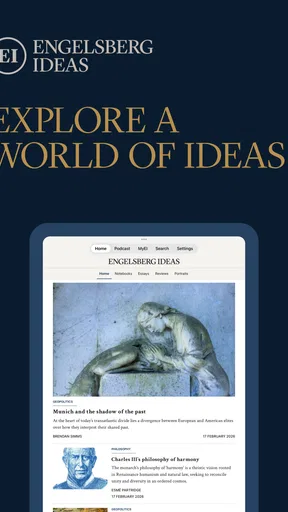

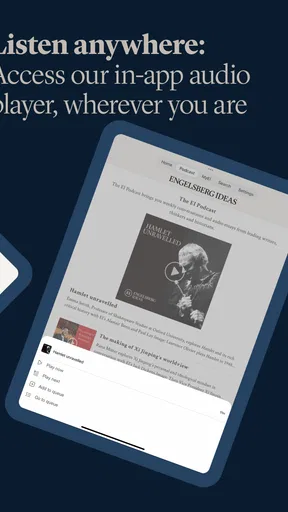
Our Review of Engelsberg Ideas
 Analysis by Appyee
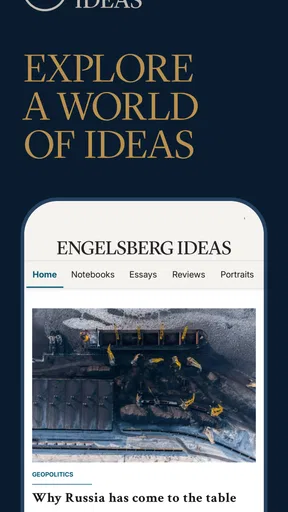
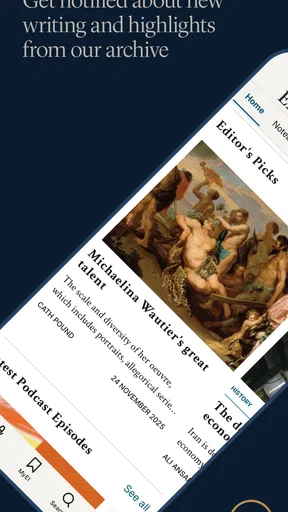
I approached Engelsberg Ideas as a reading app rather than another headline stream. Its focus is deliberately narrower: essays, analysis and podcasts connected to history, geopolitics and culture. That choice changes the experience immediately. Instead of encouraging me to skim dozens of short updates, it gives me material that asks for attention and rewards returning to an argument after some thought.
That makes it a particularly interesting option in the News & Magazines category. The app is free, suitable for Everyone, and developed by Engelsberg Ideas. It has reached over ten thousand installs and holds a perfect 5.0 average from around 154 ratings, which suggests a small but highly positive audience. I would still treat those figures as an indication of early enthusiasm rather than proof that it suits every reader.
Why the long-form approach matters
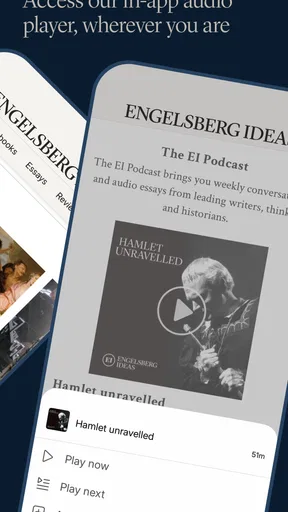
The central capability here is the combination of serious written material and podcasts around the same broad intellectual territory. In practice, that means I can use the app in two different moods: I can sit down for a concentrated reading session, or I can listen when my hands and eyes are occupied. The value is not simply having two formats. It is having a destination built around ideas rather than a constant flow of breaking news.
That distinction matters because the usual news app is designed around immediacy. It is useful when I need to know what happened this morning, but it often leaves little room for context. Engelsberg Ideas points in the opposite direction. History helps explain where an argument came from, geopolitics connects events across borders, and culture gives political questions a human and historical dimension. I found that combination more useful for building understanding than for checking alerts.
The app’s best quality is therefore its editorial focus. I do not open it expecting a complete daily news briefing, local reporting or a rapid list of developing events. I open it when I want to spend time with a subject and come away with a more considered view. This is an app for interpretation, not a replacement for a breaking-news service.
Reading as a deliberate activity
Long-form content changes how I use my phone. With a conventional news feed, it is easy to read a headline, glance at the first paragraph and move on. Here, the subject matter encourages a slower rhythm. I am more likely to pause over an unfamiliar reference, compare an argument with something I already know, or return to a piece after hearing a related discussion.
That slower rhythm is a strength for students, curious general readers and anyone who feels overwhelmed by fragmented news. It is also a limitation for people who want quick answers. If I only have a minute while waiting for a bus, the app may not provide the same immediate satisfaction as a short news summary. Its usefulness grows when I can give it a proper block of attention.
I also appreciate that the subject range is broad without being random. History, geopolitics and culture overlap naturally, so a reader can move from a historical question to a contemporary international issue without feeling that the app has abandoned its purpose. The trade-off is that the experience depends heavily on whether those themes match your interests. Someone looking mainly for technology, sport, entertainment schedules or local headlines should look elsewhere.
How the written and audio formats fit daily routines
The practical appeal of the podcast side becomes clearer when I stop treating it as a separate product. Reading works best when I can mark out quiet time: a coffee break, a train journey with a seat, or an evening when I want something more substantial than social media. Audio is better suited to walking, cooking or commuting. The same general interest in ideas can continue even when reading is inconvenient.
My advice is to choose the format based on the task rather than forcing one habit. Use written essays when you want to inspect an argument carefully. Choose podcasts when you want to absorb a discussion while doing something routine. This sounds simple, but it prevents a common disappointment: expecting audio to replace the precision of reading, or expecting essays to work as casual background entertainment.
Because the app is centered on analysis, I would not use it as my only source when I need to verify a rapidly changing situation. A thoughtful essay can provide valuable framing, but it is not the same thing as a live update. My workflow would be to use a conventional news source for immediate facts and Engelsberg Ideas for the historical or cultural context that helps those facts make sense.
A realistic everyday use case
Imagine that I have seen several reports about a diplomatic dispute but keep encountering references I do not understand. Opening this app would not necessarily give me a minute-by-minute account of the dispute. What it can offer is a more patient route into the background: historical patterns, competing interpretations and the cultural assumptions that shape how different sides describe the issue.
I might read an essay during a quiet evening, then listen to a podcast episode on a walk the following day. That two-step routine is more valuable than consuming both formats back to back. The reading gives me structure, while the listening lets me revisit the topic without staring at a screen. Afterwards, I have a better set of questions to bring to current reporting instead of simply collecting more headlines.
This is also where the app can work well for informal learning. I would use it before a trip, while exploring a historical subject, or when preparing for a discussion where a shallow opinion is unlikely to be enough. It is not a course with a fixed syllabus, so I would keep my own notes and treat each piece as part of a wider reading path.
Three ways to get more from it
First, I would avoid judging an essay by its opening alone. Analytical writing often becomes more useful once its central claim is clear. I would read far enough to identify the author’s main explanation, then ask which historical assumptions support it. That turns passive reading into a simple critical exercise and helps separate a persuasive argument from one I merely happen to agree with.
Second, I would pair formats across days rather than within the same sitting. A written piece can introduce the vocabulary of a subject, while a podcast can make the broader implications easier to remember. Even without treating the two as a formal series, this approach creates a stronger mental connection than scrolling through unrelated items.
Third, I would keep a small list of questions instead of trying to remember every detail. For example, I might note which historical comparison seemed strongest, what evidence I would want to check independently, and which part of the argument felt least convincing. This is especially useful with geopolitics, where confident explanations can hide important uncertainty.
These habits are not flashy features, but they reveal the app’s real strength. It works best when I use it as a tool for sustained thinking, not as another place to fill spare seconds. That is a meaningful difference from the normal news-feed routine.
Where the experience has limits
The same focus that makes the app distinctive can make it feel narrow. If I want a broad snapshot of the day, I would choose a general news reader. If I want a searchable archive of every possible topic, I would choose a larger publication platform. Engelsberg Ideas is more appealing when I value a defined intellectual direction over maximum breadth.
There is also a commitment involved in long-form media. Essays and podcasts ask me to decide whether I am willing to spend time with the subject. On a busy day, that can feel like work rather than relaxation. I would not recommend installing it simply because I want more content on my phone. I would recommend it if I want better context and more deliberate attention.
Readers who prefer strongly personalized feeds may also need to adjust their expectations. A tightly curated topic stream can be convenient, but it can also reinforce existing interests. With this app, I would make an effort to explore beyond the subjects I already recognize. That is one of its educational benefits, although it requires more initiative than tapping through algorithm-selected headlines.
The perfect average rating is encouraging, yet the audience remains relatively modest. I would interpret that combination as a sign that the app has resonated deeply with its current users, not as a guarantee of universal appeal. A specialist publication can receive very positive reactions from the people who want exactly that kind of material while still feeling too serious or selective for everyone else.
Who should install it
I think the strongest audience includes readers who enjoy history but want to connect it with present-day affairs, listeners looking for thoughtful cultural and geopolitical discussions, and students who need material that goes beyond short summaries. It can also suit professionals who want a more informed background for conversations about international affairs without committing to a full academic course.
It is particularly useful for people who can create a repeatable routine. Ten minutes of reading before bed, one essay during a weekly commute, or a podcast during a regular walk gives the app a clear place in everyday life. Without that routine, it may remain installed but unused, because its value is cumulative rather than instantly addictive.
I would tell a friend to skip it if their main need is local reporting, urgent alerts, practical service information or entertainment news. I would also suggest another option to anyone who dislikes opinion-led analysis and wants only brief, neutral summaries. This app is more suitable for readers who are comfortable examining interpretations and deciding where they agree.
Device requirements and overall value
The current release is version 1.4 and runs on Android 8.0 or later. That makes it accessible to people who are not using a recent phone, which is helpful for a reading-focused app where the quality of the material matters more than having the newest hardware. Since it is free, trying it does not require a financial commitment, and the Everyone age classification makes it suitable for a broad household audience.
I would still approach the installation with a specific purpose. Free access removes the price barrier, but it does not remove the time cost. The real question is whether I want a focused place for essays and podcasts, rather than whether I can add another news icon to my home screen. If the answer is yes, the app has a clear role alongside, not instead of, a general news source.
For mobile use, I would think about the moment before opening it. A long essay suits a seat on a train or a quiet lunch far better than a crowded walk where interruptions make it hard to follow a line of thought. Podcasts fit those hands-busy moments more naturally, but they still ask for attention; I would not treat a complex discussion as ideal background if I need to concentrate on traffic or a demanding task.
Connectivity matters most when I am choosing that moment. With reading and listening content, a weak connection can turn a planned session into waiting or interruptions, so I would open the material when I have a reliable connection rather than assume it will be ready in every setting. For a journey with patchy reception, I would arrange another source of entertainment or reading instead of relying on this app to work without a network.
If a page or audio item does not load, my practical response would be to check the connection and try again once it is stable. That is a small but useful distinction from downloaded books or saved audio: I would not build a time-sensitive routine around access I have not already confirmed. When the connection returns, I can resume the intended reading or listening session, but I would keep a note of the topic if I was interrupted midway through a dense argument.
For readers watching mobile data, a sensible habit is to use essays when connected to Wi-Fi and reserve podcast listening for situations where the connection and data allowance are comfortable. I cannot assume every item behaves the same way, so I would avoid starting a long listening session on a limited connection without checking how my phone is using data. That extra bit of planning is worth it when the goal is focused attention rather than an endless stream of short updates.
After using it with that expectation, I see Engelsberg Ideas as a calm counterweight to hurried news consumption. Its strongest capability is the way it brings history, geopolitics and culture into a slower reading-and-listening habit. It will not satisfy every information need, and it is not the right choice for immediate headlines, but it can help turn scattered curiosity into a more connected understanding of the world.
Verdict
Strengths of Engelsberg Ideas
- Simple interface makes browsing ideas quick and comfortable.
- Useful inspiration for creative projects, planning, and everyday decisions.
- Ideas are presented in a clear, easy-to-scan format.
- Lightweight experience should work well on many devices.
- Can help users discover perspectives they may not have considered.
Limitations of Engelsberg Ideas
- Some ideas may feel too general for users seeking detailed guidance.
- Content quality can vary depending on the topic or category.
- Limited personalization may make recommendations feel less relevant.
- The app may offer little value to users who already have a clear plan.
- Frequent browsing can become repetitive without regular content updates.
Similar Picks in This Category
View All
Google News - Daily Headlines
Google LLC4.0

X
X Corp.4.8

Flipboard:Your Social Magazine
Flipboard3.4

Opera News: breaking & local
Opera4.5

Hindi News by Dainik Bhaskar
Dainik Bhaskar Group4.0

Way2News Daily News App
Way2News ( Formerly Way2SMS )4.6
Frequently Asked Questions
What is Engelsberg Ideas, and what kind of content does it offer?
Engelsberg Ideas is a digital platform focused on essays, discussions, and commentary about history, culture, politics, science, and society. Its content is generally written by academics, journalists, authors, and other specialists. The app or mobile experience is designed for readers who enjoy thoughtful, long-form articles rather than short social-media updates or fast entertainment.
Is Engelsberg Ideas free to use, or does it require a subscription?
Many articles and features on Engelsberg Ideas may be available to read without payment, but access can depend on the publication’s current policy, account requirements, or specific premium content. Before downloading or registering, users should check the latest information shown in the official app store listing or on the Engelsberg Ideas website, since subscription options and access rules can change over time.
Can I read Engelsberg Ideas articles offline?
Offline reading depends on the version of the app or mobile service currently available. Some platforms allow users to save articles for later, while others require an active internet connection to load the full content. If offline access is important to you, check the app’s description, settings, and article menu after installation. You should also confirm whether saved content remains accessible after logging out.
Is Engelsberg Ideas suitable for casual readers and students?
Engelsberg Ideas can be useful for both casual readers and students, although much of its material is analytical and may require concentration. Articles often explore complex historical, political, or cultural subjects in considerable depth. Students may find the essays valuable for background research and further reading, but the platform should not automatically be treated as an academic source without checking the author, references, and reliability of each individual article.
What privacy permissions and account features should I expect?
The permissions and account features depend on whether you use the dedicated application, a mobile website, or a related reading service. Typically, users may be asked to create an account, manage reading preferences, receive notifications, or save articles. Review the permissions requested during installation and read the privacy policy before registering. Avoid granting access that is unrelated to reading, browsing, or account management.
